The Rise of a Small Giant
There was a time—not long ago—when Croatian wines were spoken of only in hushed tones among insiders, poured quietly at private tables, enjoyed but not yet celebrated. Today, that time is gone.
In the span of just a few short years, Croatian winemakers have stepped confidently onto the global wine stage, their bottles gathering gold medals, platinum nods, and top-tier scores at the world’s most prestigious competitions. The Decanter World Wine Awards, Mundus Vini, IWC, and others now regularly feature names from Kutjevo, Motovun, and Pelješac.
This is not an overnight sensation. This is a crescendo decades in the making.
Decanter World Wine Awards: Where Croatia Made Its Mark
If there’s one competition that draws the eyes of the international wine world, it’s the Decanter World Wine Awards (DWWA). Since 2021, Croatian wines have been carving out space and grabbing headlines. By 2024, the country had achieved something remarkable: 366 medals, the highest ever, surpassing previous record totals of 314 (2022) and 358 (2023).
Among the standout gold medalists of 2024:
- Galić Winery (Kutjevo) – A consistent performer, awarded for Graševina and Sauvignon Blanc, showing Slavonia’s crisp white credentials.
- Fakin Winery (Motovun) – Taking gold for Teran, an Istrian red once overlooked, now internationally respected.
- Viña Deak (Dalmatia) – For bold indigenous reds, proving Dalmatia’s complexity.
- Zigante (Istria) – Recognized for Malvasia Istriana, the queen of Istrian whites.
In 2023 alone, Croatia brought home 25 gold medals, including multiple for:
- Benvenuti Winery, who captured three for Teran and Muškat Momjanski.
- Nerica Vina, whose Pošip 60 earned a dazzling 95 points—a benchmark for orange wine done right.
- Kutjevo Winery, whose Ice Wine Graševina 2018 notched 96 points.
A Country of Regional Titans
Istria & Kvarner: White Wine Royalty
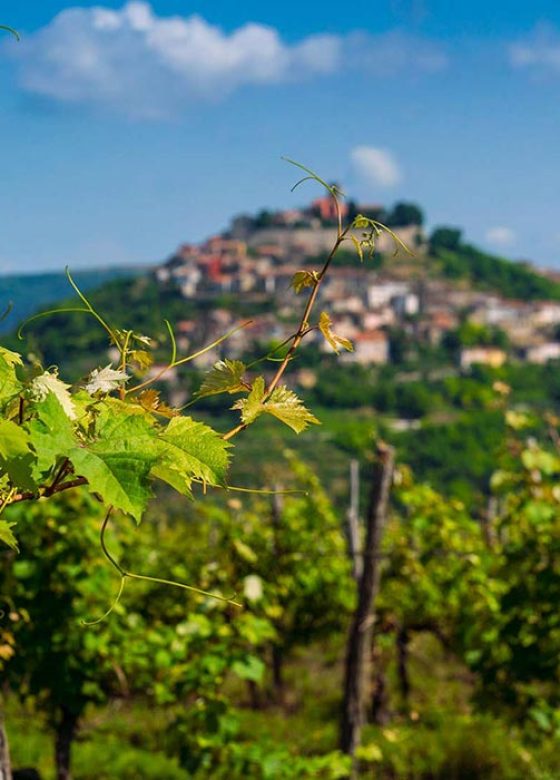
Istria’s rise has been nothing short of stunning. With 53 medals in 2023, the region has become synonymous with excellence in Malvasia Istriana and Teran.
- Benvenuti’s San Salvatore Muškat 2015 earned platinum—a sensory masterclass in aromatic expression.
- Kozlović’s Teran Selekcija 2021 scored 95 points, showcasing herbal tension and bright acidity.
Dalmatia: Red Wines with Soul
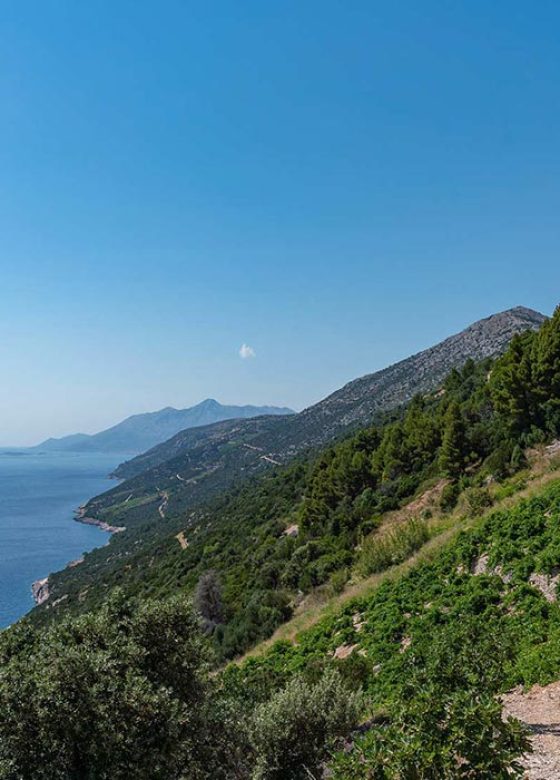
Dalmatia’s wine identity is built on stone, sun, and survival. Its reds—Plavac Mali, Tribidrag, Babic—are as rugged as the coastline they come from.
- Prović Winery’s Pagan Reserva 2018 (95 points)
- Kraljevski Vinogradi’s Gladiator 2019 (95 points)
…each reaffirm the power and longevity of Plavac Mali. Meanwhile, Darko Matijević’s 2018 Plavac and Ante Sladić’s 2022 Debit continue to turn heads with freshness and finesse.
Slavonia & Danube: The Quiet Power of Whites
For those who crave linear, mineral, structured white wines, Slavonia remains Croatia’s quiet ace.
- Galić’s Sauvignon Blanc 2022 – 95 points. Pure green elegance.
- Kutjevo’s Vrhunska Graševina 2022 – 95 points. A national standard-bearer.
- Vina Jakob’s Jakob Cuvée 2019 – A bold blend of Graševina and Chardonnay, awarded 95 points.
And it’s not just the usual suspects…
Mundus Vini 2025: Vina Belje’s Moment
At the 2025 Mundus Vini Spring Tasting, Vina Belje—with over 500 hectares in the Osijek region—made history:
- Six golds, five silvers, and a newfound status as a regional powerhouse.
Graševina Select 2024 and Graševina Premium 2024 confirmed what locals always knew: Graševina is not just a wine, it’s Slavonia in a glass.
Red blends like Goldberg Red and Ruby surprised many with their bold expression of international grapes in continental terroir.
This wasn’t a fluke. It was a declaration.
Wineries You Need to Know (And Taste)
- Benvenuti Winery (Motovun, Istria)
Four-time platinum medalist at DWWA. Their San Salvatore Muškat 2018 (95 pts) and Livio Teran 2019 (96 pts) are modern classics. - Kozlović Winery (Istria)
The heart of refined Teran and elegant Malvasia. Their Santa Lucia Malvasia took platinum in 2021, and their Teran Selekcija 2021 remains a benchmark. - Nerica Vina (Dalmatia)
Producers of Pošip 60 2020, one of Croatia’s most awarded skin-contact wines—blending freshness with gentle oxidation. - Galić Winery (Slavonia)
Year after year, Galić delivers. Ego Tribidrag 2019 (gold), Sauvignon Blanc 2022 (95 pts), and his Graševina lineup prove range and polish. - Kutjevo Winery
If Croatia had Grand Cru status, Kutjevo’s Ice Wine Graševina 2018 (96 pts) would wear the crown. Their portfolio walks the line between tradition and technical brilliance. - Vina Jakob
An emerging white wine star. Their Jakob Cuvée 2019 is Slavonia’s answer to Burgundy—a blend that hums with complexity. - Cmrečnjak Winery (Croatian Uplands)
Proved the overlooked Pušipel grape can shine, earning gold for their Mađerka Sur Lie 2021—a rare sparkling stunner. - Ante Sladić Vino
In Dalmatia, Sladić has become the guardian of old whites. His Debit 2022 (95 pts) is a citrus-slick revival of a nearly forgotten variety.
What the Future Holds
Istria: White Wine Renaissance
Istria is leaning into barrel-aged Malvasia, restrained Teran, and aromatic whites. Producers like Fakin, Vivoda, and Matić are evolving styles without losing soul.
Dalmatia: Complexity & Confidence
Red wines remain the signature, but look to Pošip, Babic, and Debit for fresh, forward-thinking whites. Orange wine culture is expanding, too.
Slavonia: Continental Elegance
Graševina is still king—but new experiments with Cabernet Franc (like Terra Slavonia’s Apolitico 2021, 95 pts) are pushing boundaries.
Croatia’s Global Wine Ambitions
It’s official: Croatia is no longer a “rising” wine nation. It’s arrived.
International awards aren’t just trophies—they’re milestones in a much longer journey. One paved with generations of farmers, thousands of stone terraces, and centuries of belief that this land, so often overlooked, has something extraordinary to offer the world.
As Osijek-Baranja County prepares to be crowned European Wine Capital in 2025, the message is clear: Croatian wine is no longer a secret.
It’s a standard.
And this is just the beginning.